
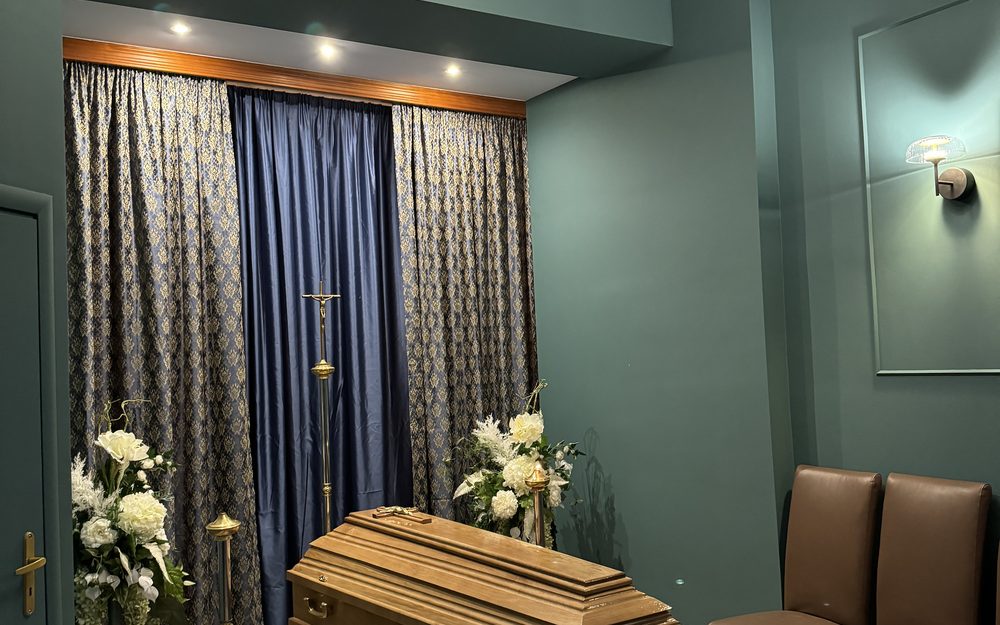
A wake (from the Latin consolatio, meaning consolation) is a gathering of family and friends with refreshments after the funeral ceremony. It is the same as a wake - only in a more elegant, contemporary form. It is not obligatory; it usually lasts 2-3 hours. We will help arrange the reception and transport for the guests. Tel. 660 950 600.
Arranging the farewell of a loved one is a time full of difficult emotions, in which many of us have to deal with numerous formalities and decisions. One of them is preparing a gathering for family and friends after the ceremony at the cemetery - the so-called consolation gathering. The word comes from Latin (“consolatio”) and literally means comfort, relief. So what is a consolation gathering? It is a formal meeting of the family and friends of the deceased, with refreshments or a meal, held after the funeral for those who attended. Its main purpose is not only to host the guests (who often travel from far away), but above all to offer mutual support in grief, to remember the deceased together and to bring relief and comfort to the grieving family. What should be kept in mind when arranging it, and why is its role in the process of mourning so important?
Arranging the wake - where does the custom come from?
The tradition of sharing a meal after a burial has a remarkably rich history. Not everyone knows that it goes back to antiquity - in ancient cultures, among them the Romans and the Greeks, funeral meals were held that carried ritual and symbolic meaning. It was believed that a meal eaten near the place of burial joined the world of the living with the world of the dead. In the Slavic tradition the custom was known as “żalnik” or “tryzna” and was an inseparable part of funeral rites. Over the centuries, with the growth of Christian culture and social change, the ritual evolved - losing its pagan character and taking the form of a quiet, solemn gathering of the closest family. The modern wake continues this centuries-old tradition, allowing the day of farewell to be closed in a civil and respectful way.
Are a consolation meal and a wake the same thing?
Many people who want to arrange a consolation gathering wonder whether it is the same as a wake. In everyday language the two terms are used interchangeably - yet in terms of style and custom there are subtle differences between them. It is worth knowing that both a consolation gathering and a wake describe the same kind of meeting after the funeral - what differs is the context and the emotional tone. A wake is a term deeply rooted in Polish folk and colloquial tradition. In the past wakes were usually very crowded events, and over time (though unfairly) the word came to be associated by some with feasting. A consolation gathering, in turn, is a decidedly more modern, elegant and formal term - readily used by restaurants, funeral homes and people who wish to emphasise the solemn, calm and dignified character of the meeting. The choice of this word stresses the psychological aspect of the event - that is, the comfort and mutual support mentioned earlier.
What to remember when arranging the wake?
Arranging a wake requires a logistical approach at a time that is usually very painful for the family of the deceased. That is why it is so important at this particular moment to be able to rely on the professional approach of a company that organises wakes. For the gathering to take place in an atmosphere of calm and respect, it is worth taking several important factors into account:
- Location - for many members of the family the best solution is a restaurant or venue close to the cemetery or the church (which makes travel much easier for the invited guests, especially older people and those unfamiliar with the city where the funeral takes place).
- Menu - traditionally a classic two-course dinner with dessert is chosen for the wake. So that the wake passes in a calm, warm atmosphere, it is worth checking with the venue manager whether vegetarian or gluten-free dishes are available (so that every guest feels looked after with proper care).
- Number of guests - estimating the number of guests can be difficult, so it remains good practice to confirm attendance discreetly with the closest family in advance, or to prepare spare seats at the venue. Reserving a few extra places for those who may decide to attend at the last moment is also a sound solution.
- Budget and duration - a wake usually lasts from 2 to 3 hours. If family or friends have travelled from far away, this time may naturally be extended. It is worth agreeing a “per plate” settlement with the venue owners, which helps avoid additional stress on an already demanding day.
- Transport for guests - since not everyone wishing to attend the wake is mobile, it is worth arranging professional transport for the guests (both from the church to the cemetery and from the cemetery to the venue where the wake will be held).
Is the wake obligatory?
“Is a consolation gathering obligatory?” is a question that often comes up in families of the deceased who want to keep the cost of the funeral to a minimum. Although in many families the gathering has indeed become something of a tradition, there are no legal or religious rules in Poland requiring a meeting after the funeral. It is simply a custom, entirely voluntary and dependent solely on the wishes of the family of the deceased. Let us remember that the purpose of such a meeting is above all to create space for remembering the deceased together, for conversation and for mutual support in difficult moments - and the decision to hold it depends on many factors (for example the financial situation, the number of funeral guests, family relationships). The most important part of the farewell remains the funeral itself and the chance to pay respect to the deceased. The gathering is only an additional element of tradition, one that can help the family and friends go through the period of mourning together. Its absence should not, however, be a reason for guilt or for fear of being judged by others.